Fence installation, gates and repair across South Florida
Compare eight service options, material choices, gate access, maintenance and project-specific permit planning across Miami-Dade, Broward and Palm Beach.
Aluminum picket fencing defines a property boundary without blocking views. It is a useful option when you want an open front yard, visible landscaping or a lighter-maintenance alternative to painted steel. It is not a full-privacy fence; height, grade, finish and gate layout should be selected for your property and approvals.
• Choose flat-top or decorative-top styling and confirm acceptable colors
• Measure each gate opening, including space for hinges and latches
• Review slopes, drainage swales and any easements on the survey
• Ask for the selected panel grade, finish and warranty terms in writing
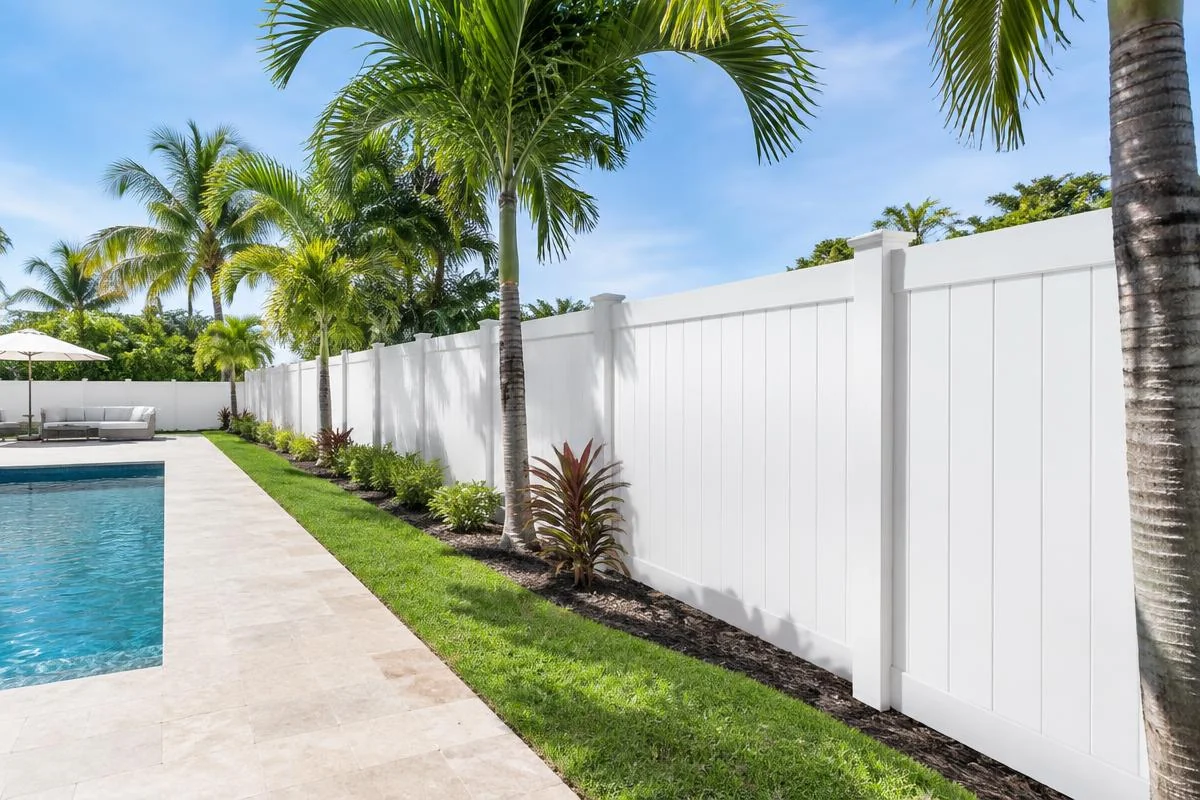
Vinyl and PVC are names commonly used for the same fence material. A solid vinyl privacy fence screens a yard without regular repainting, while semi-privacy and picket styles leave more openings. The right system depends on the amount of privacy you need, available colors, grade changes and the approved post-and-panel design.
• Choose full privacy, semi-privacy or a picket style
• Check the association's permitted color, height and panel profile
• Confirm post reinforcement, spacing and footers for the selected system
• Review stepped panels, bottom gaps and gate operation on slopes
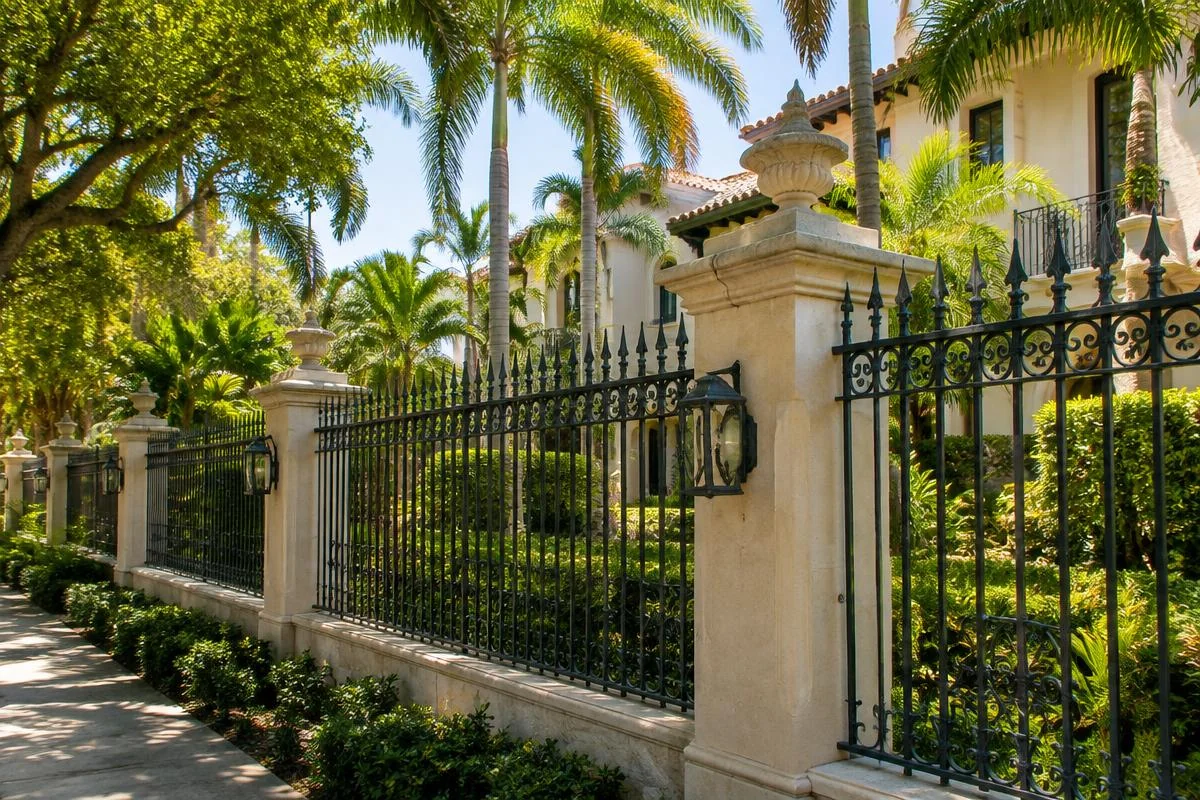
Ornamental metal fencing provides an open boundary with a decorative appearance. Many products described as wrought iron are actually steel, so the quote should identify the metal, panel design and corrosion-protection system. Compare ornamental steel with aluminum when appearance, maintenance and coastal exposure are competing priorities.
• Identify whether the supplied metal is steel, iron or aluminum
• Choose the panel pattern, finish and gate design
• Discuss coating protection at connections and cut ends
• Confirm support details, availability and written warranty terms
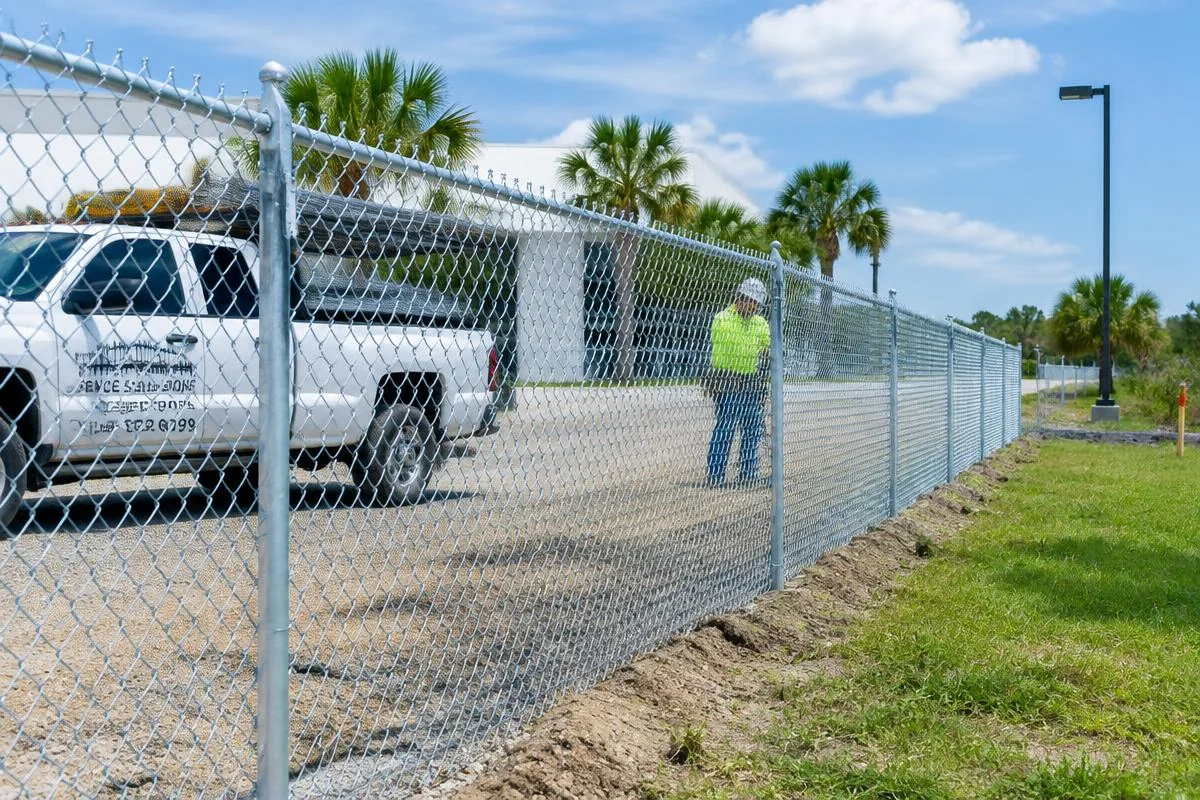
Chain-link fencing encloses a property while leaving views and airflow open. Galvanized mesh offers the familiar silver finish; black vinyl-coated mesh offers a darker appearance that can blend with landscaping. Height, mesh, framework, gates and any added screening should be specified together for the intended enclosure.
• Choose galvanized or coated mesh and framework
• Confirm mesh size, wire specification and fence height
• List walk gates, double-drive openings and clear vehicle widths
• Discuss any privacy additions before the posts are specified
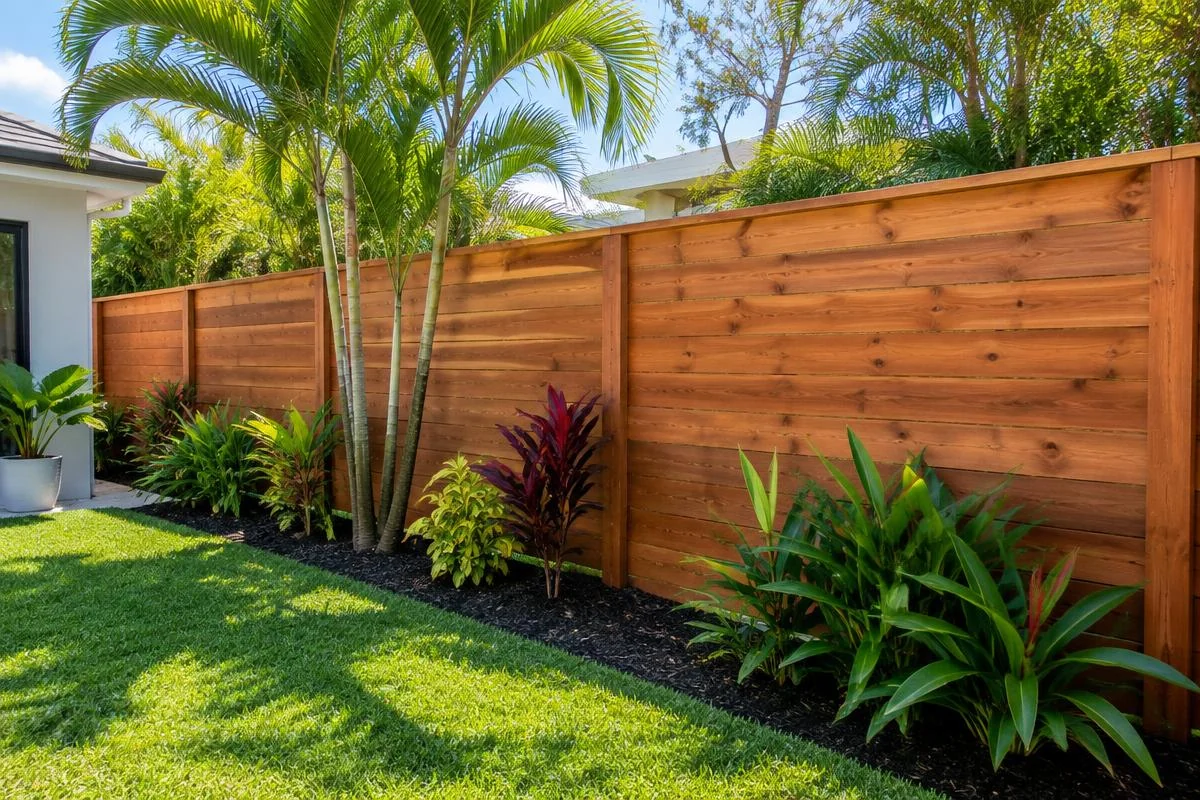
Wood fencing offers privacy and a natural appearance in vertical, board-on-board, shadowbox or horizontal layouts. It needs periodic care, and the board pattern affects privacy as the lumber changes with weather. Compare the wood, posts, fasteners, ground clearance and finishing plan before choosing on price alone.
• Choose the board pattern based on privacy and appearance
• Identify lumber and post materials in the proposal
• Review ground clearance, drainage and fasteners
• Plan finishing around the wood and coating manufacturer's moisture guidance
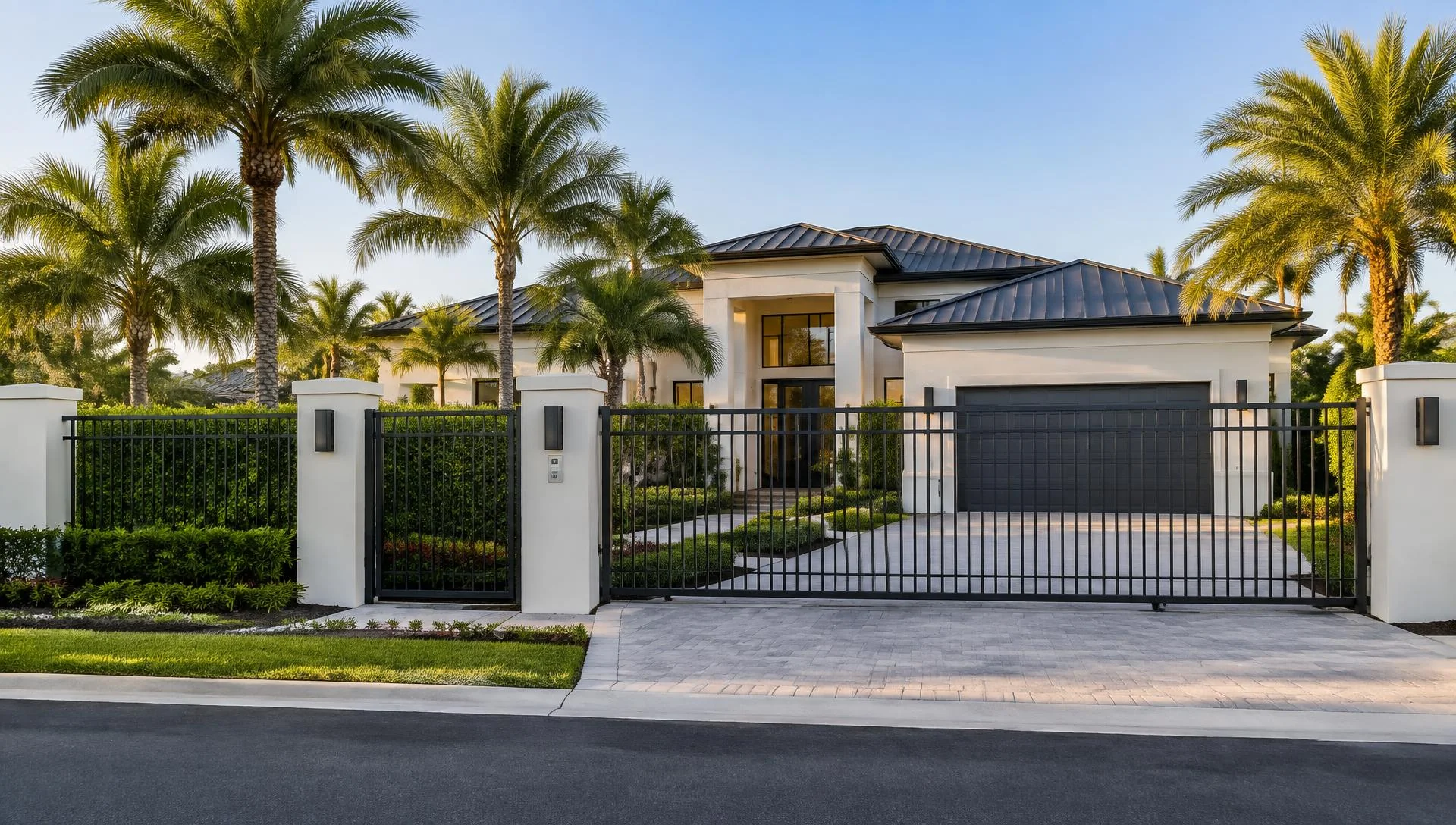
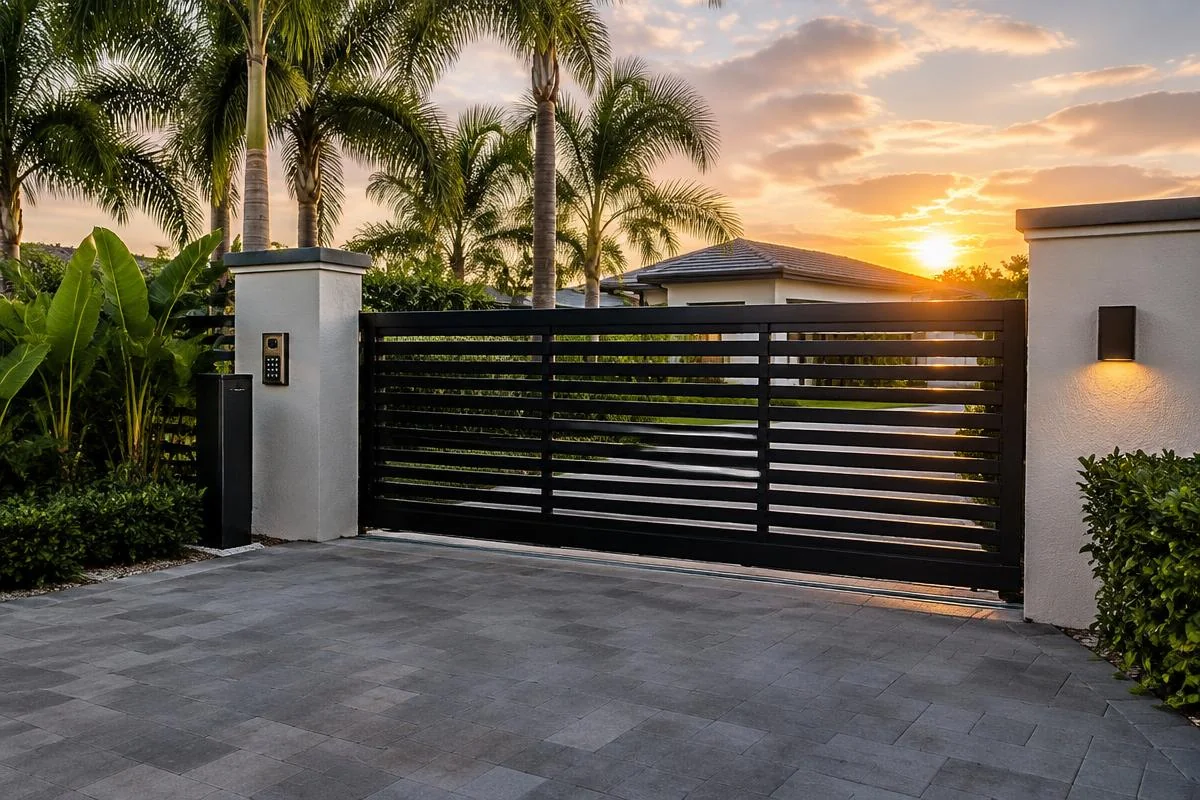
An automatic driveway gate combines a moving gate, supports, an operator, access controls and safety devices. Swing gates need a clear arc; slide gates need space alongside the opening. The right layout starts with the driveway slope, vehicle movements, power and emergency access—not just the preferred appearance.
• Measure usable opening width and swing or slide clearance
• List expected vehicles, users and opening frequency
• Discuss safety devices and emergency/manual access
• Identify power, conduit and any electrical permit coordination
Fence repair starts by checking the supports, connections and gate hardware—not only the visibly damaged panel. A targeted repair can make sense when the surrounding fence remains sound and matching parts are available. Compare repair with replacement when failures extend through posts, rails or multiple sections.
• Photograph the damage and adjacent fence from a safe position
• Identify material, approximate age and affected length if known
• Note gate problems, loose posts and repeated previous repairs
• Compare the cause, remaining condition and matching-parts availability
Commercial security fencing should be planned around the site boundary, daily operations and access points. Mesh, height and gates need to suit the intended use, while approval requirements, vehicle clearances and safe pedestrian routes need coordination. A complete scope distinguishes fixed fencing from gates, access controls and electrical work.
• Provide site plans, boundary information and existing specifications
• List truck widths, turning needs and peak access periods
• Identify pedestrian routes and operational constraints
• Define submittals, approvals, phasing and handover requirements
How much does a fence cost in Miami-Dade, Broward or Palm Beach County?
Installed pricing in the tri-county market generally runs $22–$38 per linear foot for chain link, $32–$72 for wood, $38–$78 for aluminum, $42–$85 for vinyl and $65–$180 for custom wrought iron. Driveway gates with automation are quoted separately, typically $6,500–$45,000. The variables that move a quote most are height, gate count, coral rock excavation, tight access and demolition of an existing fence.
Do I need a permit to install a fence in South Florida?
Confirm fence-permit requirements with the authority responsible for your property. Fence type, height, location, repair or replacement scope and supporting documents can affect the approval route. Association approval is separate from municipal or county permission.
How close to the property line can I build a fence?
Confirm placement using the property survey, recorded easements and the responsible permitting authority's current rules. Setbacks, corner visibility, drainage access and association restrictions may affect the layout. A neighboring fence is not proof that the same location or height is allowed on your property.
What fence holds up best in a hurricane?
No material makes a fence hurricane-proof. Wind performance depends on the complete system, height, exposure, supports, connections, installation and impacts. Open and solid designs behave differently; request the project-specific installation details instead of relying on a hurricane-category promise.
How long does the whole process take?
The schedule depends on measuring availability, project scope, materials, permit review and any required association approval. Confirm those dependencies and current installation availability when requesting your written estimate.
Do you offer financing?
Yes — we offer financing options on qualifying residential projects and can structure milestone payments on larger commercial and HOA contracts. Ask when you call for your estimate.
Are estimates really free?
Yes. On-site measurement, design consultation and a written fixed-price proposal cost nothing and carry no obligation, anywhere in Miami-Dade, Broward or Palm Beach County.
Are you licensed and insured?
Yes. IronLine Fence is a licensed and insured South Florida fence contractor carrying general liability and workers' compensation coverage, and we provide certificates of insurance on request for HOA, commercial and general-contractor projects.