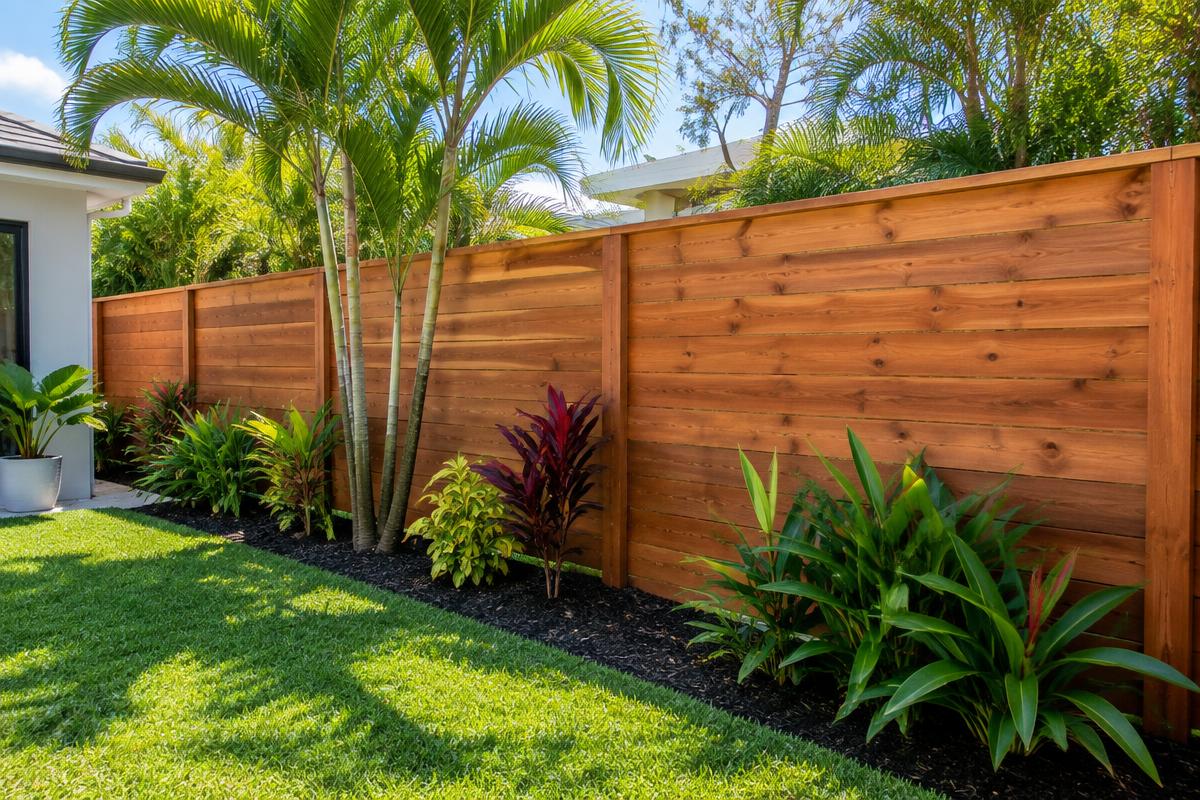
Wood Fence Installation
Wood Fence Installation Built for Florida Conditions
Pressure-treated pine, cedar and horizontal board fencing built for Florida moisture and termites.
A wood fence in South Florida fights humidity, termites, driving rain and a water table that sits a few feet below the surface in much of the region. Built conventionally, it warps within two seasons. Built correctly, it lasts 15 to 20 years and looks better than anything synthetic.
Our wood systems use ground-contact-rated pressure-treated posts, galvanized or steel post options, hot-dip galvanized or stainless ring-shank fasteners, and a gap detail at grade so no board wicks moisture out of wet soil.
What's included
- Board-on-board, shadowbox, stockade, horizontal and picket styles
- Pressure-treated southern yellow pine, western red cedar and cypress
- Steel or PT posts set in poured concrete with a crowned cap to shed water
- Stainless or hot-dip galvanized ring-shank fasteners — no rust streaking
- Two-inch ground clearance detail to stop rot and termite bridging
- Optional stain and sealer package applied after a proper dry-out period
Why most South Florida wood fences fail early
The three killers are ground contact, fastener corrosion and unsealed end grain. Standard-treated lumber rated for above-ground use rots when buried. Electro-galvanized screws corrode within a couple of rainy seasons and stain the boards. Cut ends left raw draw water like a straw.
We use .40 or higher ground-contact retention on anything in or near soil, stainless or HDG fasteners, and we seal every field cut. It costs a little more per foot and roughly doubles usable life.
Horizontal cedar: the look everyone wants now
Horizontal board fencing reads modern and pairs with the white stucco and dark trim palette common in new South Florida construction. It is also less forgiving — boards run long, so post spacing tightens to 6 feet or less, and every post must be dead plumb because horizontal lines expose error. We pre-select boards for straightness and reject crowned stock rather than forcing it.
Staining, sealing and your maintenance calendar
New pressure-treated lumber holds too much moisture to accept stain. We schedule the stain coat 60 to 120 days after installation, then recommend re-coating every two to three years on sun-exposed elevations and every three to four on shaded lines.
Get a wood fence installation quote
Free on-site measurement anywhere in Miami-Dade, Broward or Palm Beach County. Written, line-item pricing — usually within 48 hours.
Coverage
Wood Fence Installation throughout South Florida
We install this system in every municipality across the tri-county area. Choose your city for local code, HOA and soil notes.
Miami-Dade County
Broward County
122 cities served. View the full service area directory →
Wood Fence Installation FAQs
How long does a wood fence last in Florida?
A conventionally built wood fence often looks tired at 7 to 10 years. Built with ground-contact posts, stainless fasteners, proper footers and a maintained sealer, 15 to 20 years is realistic.
Should I use wood or vinyl for privacy?
Vinyl if you want zero maintenance and consistent appearance. Wood if you want warmth, a horizontal modern look, or the lowest entry price. Wood also repairs board-by-board, which is cheap after a storm.
Do termites eat pressure-treated fence?
Properly treated lumber resists subterranean termites, but Formosan termites in this region will attack untreated cut ends and any wood contacting soil. Our clearance detail and end-cut sealing directly address both.