
Key takeaways
- • Choose aluminum for pool barriers, front elevations, wind performance and slopes.
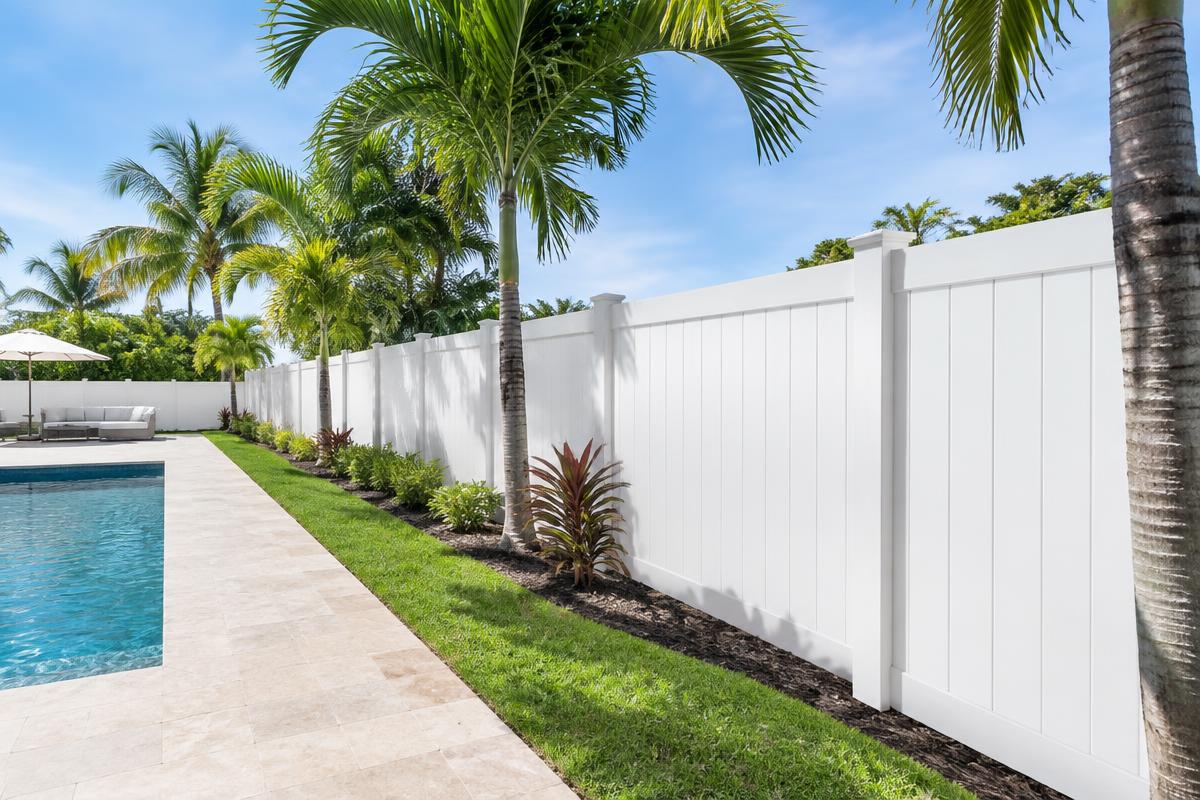
- • Choose vinyl for full privacy, noise reduction and screening at the lowest maintenance.
- • Vinyl costs slightly more per foot on average but delivers privacy aluminum cannot.
- • Both last decades in Florida when specified with UV-stable material and proper footers.
Head to head
The comparison that matters, without brand marketing.
| Factor | Aluminum | Vinyl / PVC |
|---|---|---|
| Installed cost | $38 – $78 / LF | $42 – $85 / LF |
| Privacy | None (open picket) | Full |
| Wind performance | Excellent — air passes through | Good when reinforced |
| Pool code | Compliant as standard | Compliant with correct detailing |
| Slopes | Rackable, follows grade | Steps down in increments |
| Maintenance | Rinse twice a year | Wash twice a year |
| Impact damage | Dents, panel swap | Cracks in cold, panel swap |
| Lifespan in Florida | 30+ years | 25–30 years |
| Color range | Black, bronze, white, custom RAL | White, tan, khaki, adobe, woodgrain |
Four questions that decide it
Do you need to not be seen? If yes, vinyl or wood. Aluminum cannot deliver privacy, and adding slats or panels to aluminum defeats its wind advantage.
Is this the front of the house or an HOA-visible elevation? Most South Florida associations require open fencing at the front. Aluminum wins by rule, not preference.
Is the ground sloped? Rackable aluminum follows grade continuously. Vinyl steps, leaving triangular gaps that need masonry or a base board.
Is this a pool barrier? Both can comply, but aluminum is compliant out of the box while vinyl needs the bottom gap and climbability details handled deliberately.
Where each one disappoints people
Aluminum disappoints buyers who expected privacy and buyers who chose residential grade for an 8-foot front elevation that needed commercial extrusion.
Vinyl disappoints buyers who bought the discount spec — thin posts, 8-foot spacing, recycled content — and then watched a storm take it down or the white go chalky. It also disappoints on steep grade.
The combination most South Florida homes actually want
Open aluminum across the front and along the pool, reinforced vinyl along the side and rear property lines where privacy from neighbors matters, and a matching aluminum or ornamental driveway gate tying it together. It costs less than all-vinyl on a large lot, passes HOA review more easily, and performs better in wind.
Questions we get on this topic
Which lasts longer, aluminum or vinyl?
Aluminum, generally 30 years or more with no finish maintenance. Quality virgin vinyl runs 25 to 30 years. Both far outlast wood in this climate.
Does vinyl fence crack in Florida?
Cracking is mostly a cold-climate impact issue. In Florida the failure modes are UV chalking on low-grade recycled extrusions and wind failure on under-specified posts — both avoidable.
Is aluminum fence strong enough for large dogs?
Yes, with commercial-grade extrusion, tighter picket spacing or a puppy-picket base panel, and reinforced gate hardware for dogs that push.