Key takeaways
- • Coastal Miami-Dade and Broward design to 170–175 mph ultimate wind speed; most of Palm Beach to 165–170 mph.
- • Open-picket aluminum and ornamental steel outperform solid fencing because wind passes through.
- • Footer depth and diameter, not panel brand, determine whether a fence stands.
- • Reducing post spacing from 8 ft to 6 ft cuts the load on each post by roughly 25 percent.
A fence is a sail on a lever arm
Wind pressure on a solid 6-foot privacy fence is enormous, and all of it is transferred to a post that acts as a cantilever. The bending moment at grade is the pressure times the exposed area times half the height. Double the exposed area and you double the force the footer has to resist.
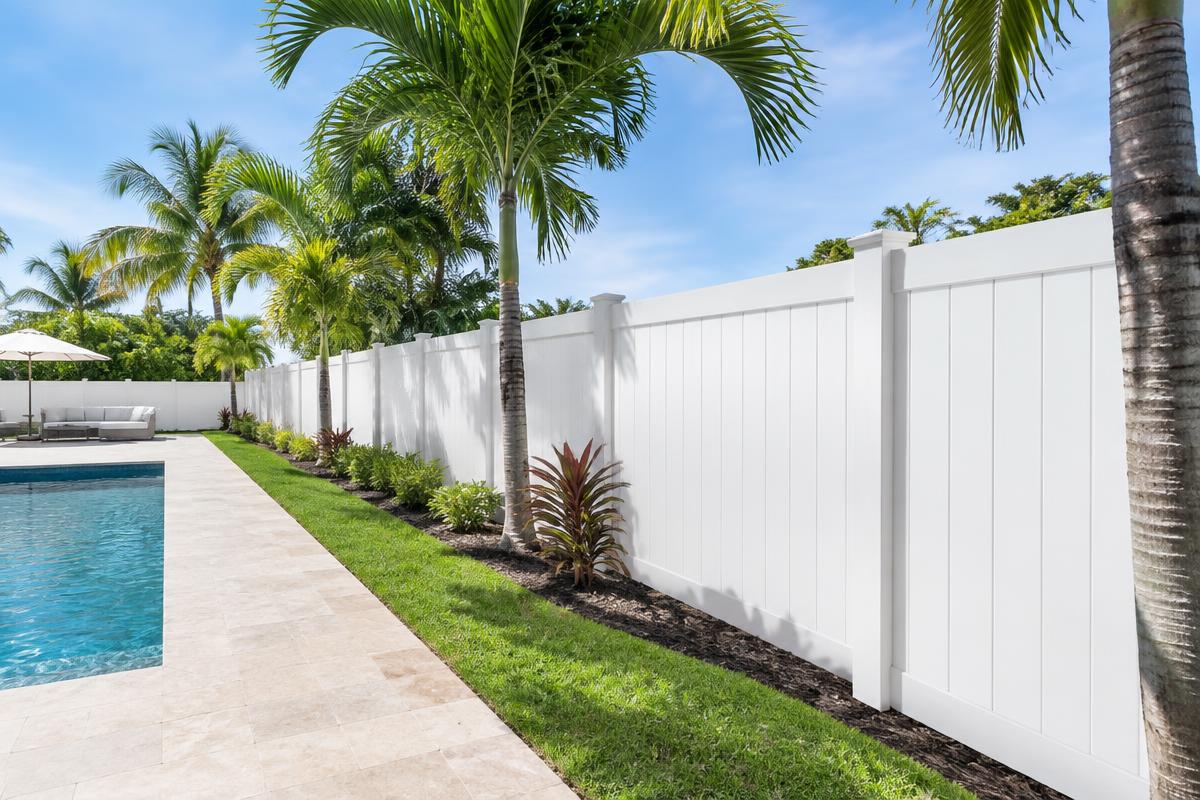
That is why a 4-foot open aluminum fence in the same wind field rarely fails while the 6-foot solid vinyl fence two houses down flattens. Not material quality. Geometry.
Footer specification, written plainly
There is no universal number, but there are defensible baselines we use across the tri-county area before adjusting for soil, exposure category and height.
| Fence height & type | Footer depth | Footer diameter |
|---|---|---|
| 4 ft open picket | 24 in | 10 in |
| 5–6 ft open picket | 30 in | 10–12 in |
| 6 ft solid vinyl / wood | 30–36 in | 12 in |
| 8 ft solid | 36–42 in | 12–14 in |
| Gate posts (any height) | +6–12 in deeper, belled | 14–18 in |
Material-by-material storm performance
Aluminum picket: excellent. Air passes through, panels are light, and individual sections can be replaced after impact damage.
Ornamental steel: excellent when hot-dip galvanized and properly footed, though heavier gates demand real pier engineering.
Chain link: very good. The mesh flexes and sheds load. Privacy slats turn it into a sail, so slatted chain link needs upgraded posts.
Vinyl privacy: good when reinforced, poor when not. The variable is post wall thickness, internal reinforcement and spacing.
Wood privacy: moderate. It fails progressively — a few boards blow out, which relieves pressure. That is also why it is cheap to repair.
Retrofitting the fence you already have
You do not always need a new fence. Targeted hardening buys real resilience.
- Reset any post that moves when you push the fence — a moving post is a failed footer.
- Add intermediate posts to reduce spans on long solid runs.
- Replace corroded fasteners with stainless before the connection tears out.
- Add internal reinforcement to gate posts and terminal posts.
- Remove a few pickets from a solid run's leeward end to create pressure relief on the most exposed elevation.
- Before a named storm: remove privacy slats and windscreen, secure or remove gates, and clear objects that become projectiles.
What insurance usually covers
Wind damage to a fence typically falls under Coverage B, other structures, commonly limited to 10 percent of the dwelling limit and subject to the hurricane deductible. Photograph your fence now, while it is intact, and keep the installation invoice. Documentation before the event is worth more than argument after it.
Questions we get on this topic
What is the most hurricane-resistant fence?
Open-picket aluminum or ornamental steel set in properly sized poured footers. Wind passes through instead of loading the structure, and damaged sections replace individually.
How deep should fence posts be in Florida?
Typically 24 to 42 inches of poured concrete depending on fence height, solidity and exposure, with gate posts deeper and wider. Bagged dry mix poured in the hole is not an acceptable substitute for a proper pour.
Should I take my fence down before a hurricane?
No, but remove privacy slats, windscreen, shade cloth and anything attached to the fence, and secure gates in the closed and latched position.