
Key takeaways
- • Height by behavior, not by breed size — a determined 40-pound dog clears 5 feet.
- • Picket spacing under 3 inches prevents head entrapment in small breeds.
- • A concrete mow strip or buried apron ends digging permanently.
- • Self-closing gate hardware prevents the single most common escape.
Start with how your dog escapes
Climbers need smooth-faced fencing with no horizontal rails on the inside — vinyl privacy or flat aluminum with the rail on the outside face. Jumpers need height: 5 feet for most, 6 for high-drive working breeds. Diggers need a subsurface barrier. Chewers rule out wood at the bottom. Gate-bolters need self-closing hinges and a latch they cannot nose open.
Material ranked for dog owners
All of these work. They work differently.
- Vinyl privacy: best for reactive dogs, because it removes the visual trigger of passing dogs and people. Smooth face, nothing to climb.
- Aluminum picket: best airflow and visibility, excellent durability, needs spacing under 3 inches for small breeds.
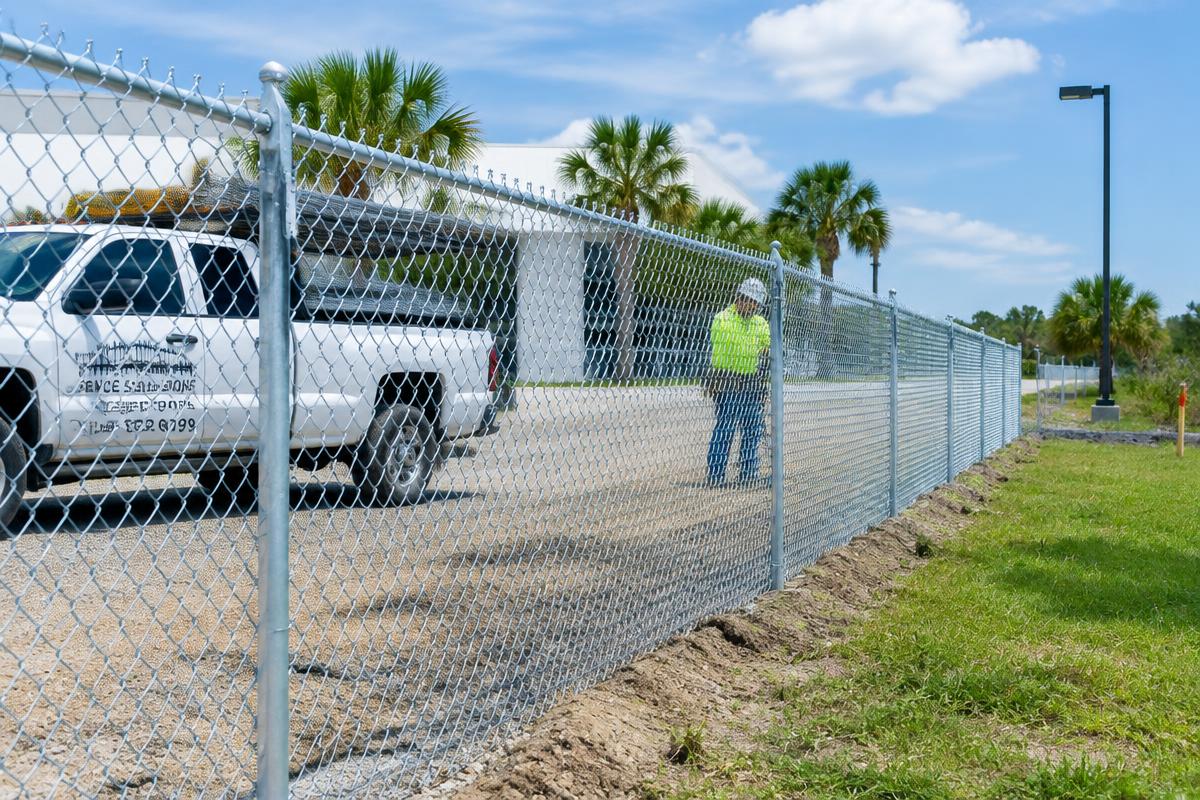
- Black vinyl-coated chain link: best value for large yards, but it is climbable, so add a top rail or an inward-angled arm for climbers.
- Wood: warm and private, but chewers and humidity both attack it at the bottom rail.
Stopping diggers for good
Three options, from least to most permanent. Bury an L-footer of galvanized hardware cloth 12 inches down turned outward 12 inches. Pour a 6-inch concrete mow strip under the fence line, which also stops string trimmer damage. Or set the bottom rail into a paver or rock trench for a landscaped look that is still solid.
Florida-specific considerations
Heat and shade: a solid privacy fence blocks the afternoon breeze. On small yards with full sun, semi-privacy or a lattice-top panel keeps airflow while still screening.
Water: canal, lake and pool lots need the dog barrier separate from the pool barrier. A single fence rarely does both jobs well.
Iguanas and wildlife: dogs chasing iguanas hit fences hard. Reinforced bottom rails and commercial-grade extrusion pay for themselves on canal lots.
Questions we get on this topic
How tall should a dog fence be?
Four feet contains most small and calm dogs. Five feet is the safe default for medium and large dogs. Six feet for athletic, high-drive or anxious escape artists.
Are invisible fences a good idea in Florida?
They do not stop other animals or people from entering, they fail in a power outage, and they do nothing for a dog that decides the correction is worth it. For containment and liability, a physical fence is the answer.
What picket spacing keeps a small dog in?
Under 3 inches. Standard pool-code aluminum at 3.9 inches will pass a puppy or a small terrier — we use a puppy-picket base panel to cut the spacing at the bottom.